


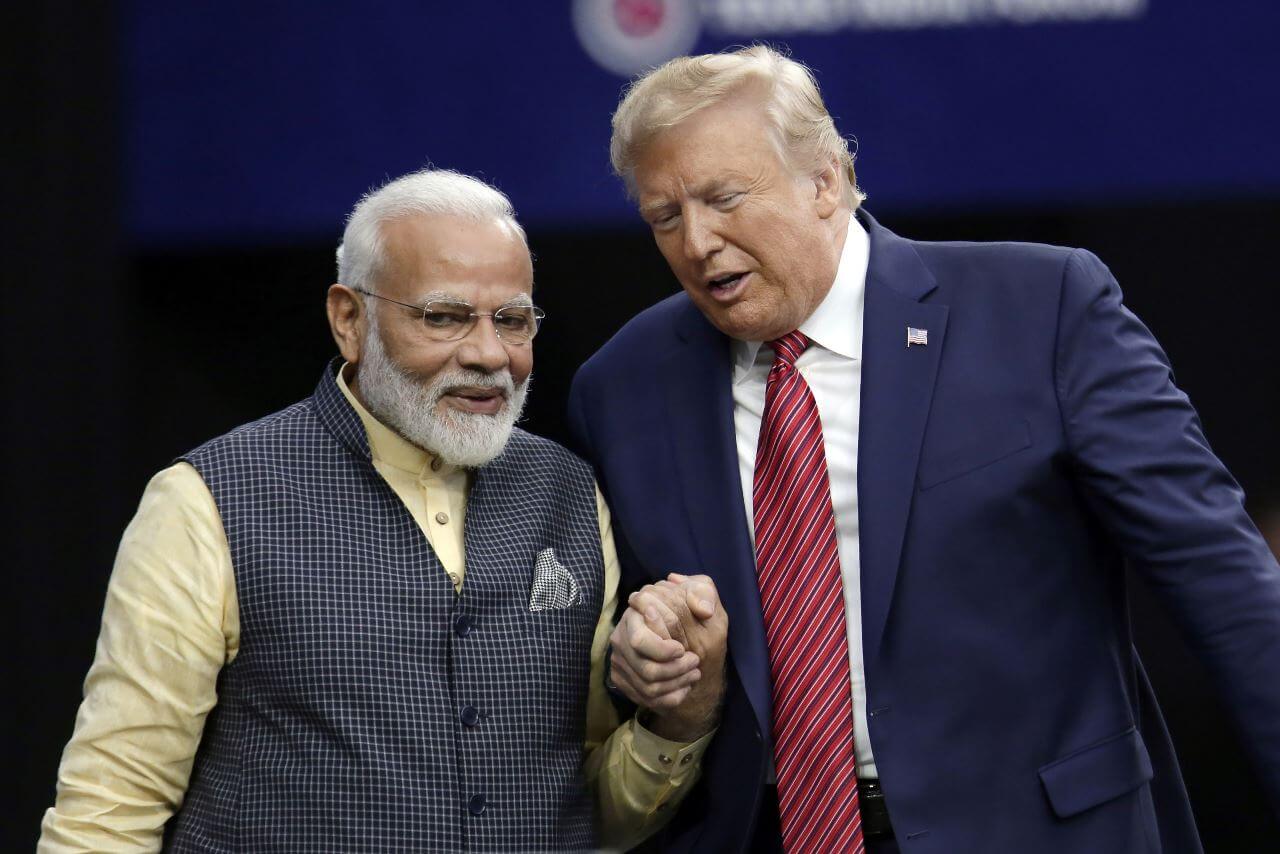
India-US Trade Deal: Details, Strategic Insights & Economic Impact
Written By

Treelife
Share
-
Link copied to clipboard!https://treelife.in/foreign-trade/india-us-trade-deal/

-

-

-

-

AI Summary
- The India-US trade deal cuts effective US tariffs on Indian goods to 18%, down from an effective rate of around 50% (a 25% base tariff plus a 25% punitive surcharge linked to Russian oil purchases).
- The agreement opens the door to over 500 billion dollars in Indian purchases from the US across energy, technology, agriculture and coal, phased over time.
- India has signalled intent to gradually reduce dependence on discounted Russian crude oil, though Prime Minister Modi has not confirmed any formal exit commitment despite President Trump's claims.
- Russian crude currently accounts for about 40% of India's oil imports, roughly 1.8 million barrels per day, priced 15 to 25 dollars per barrel cheaper than US or Gulf alternatives.
- If India shifts away from discounted Russian oil, manufacturers could face an additional 8 to 12 billion dollars per year in energy import costs.
- Textiles, pharmaceuticals and steel exporters stand to gain 30 to 35% in price competitiveness in the US market following the tariff cut.
- India's exports to the US were estimated at 81 to 85.5 billion dollars in 2024, against imports from the US of 46.1 billion dollars, giving total two-way trade of 212.3 billion dollars.
- Key uncertainties remain, including product-level tariff lists under the 18% cap, zero-duty carve-outs, and whether Section 232 duties on steel, aluminium, copper and autos will continue to apply.
- Businesses are advised to re-quote SKUs for top US-bound export categories at the new 18% duty rate, rework landed-cost models, and map HS codes carefully before pricing shipments.
Blog Content Overview
- 1 The Facts Behind the Headlines
- 2 Who Gains in the Short Term?
- 3 The India-Russia-US Triangle: Rebalancing Energy and Trade
- 4 Deep Sector Analysis: Who Benefits Most?
- 5 Founder & Investor Playbook
- 6 Deal Summary Table
- 7 Implementation Timelines & Uncertainties
- 8 What Businesses Should Do Now
- 9 Who Wins in the Short Term?
- 10 Strategic Outlook: Long-Term Alignment
- 11 Summary
What Just Happened? A $500 Billion Game-Changer
The India-US trade deal is a strategic tariff reset and economic understanding aimed at expanding bilateral trade and geopolitical alignment. At its core, the deal:
- Slashes US tariffs on Indian goods to 18%, down from an effective ~50% rate.
- Signals India’s intent to gradually reduce Russian oil dependency, although no formal commitment has been made.
- Opens the path to over $500 billion in Indian purchases from the US across energy, tech, agriculture, coal, and more.
- Positions India as a key trading partner in the West’s supply chain diversification efforts
The Facts Behind the Headlines
Tariff Slash and Strategic Exchange
- Tariff Drop: US cuts duties on Indian goods to 18%, from ~50% (25% base + 25% punitive Russian-oil-linked surcharge).
- Geopolitical Context: President Trump’s claim India to curb Russian oil imports in return. PM Modi acknowledged tariff cut but has not confirmed the oil exit.
- The Wild Card: The real swing factor is energy the trade win is clear, but India’s oil source shift could reshape cost structures.
Who Gains in the Short Term?
Competitive Price Edge
- Textiles, Pharma, Steel: Gain 30–35% competitiveness overnight in the US market.
- Export Surge Potential: India’s $81–85.5 billion export base to the US (2024) offers immediate headroom for scaling exports
- Macro Advantage: India’s $46 billion trade surplus with the US could widen, strengthening the rupee and improving current account dynamics
Risk Note: Energy Cost Impact
- If India reduces discounted Russian crude (priced $15–25 lower per barrel), manufacturers may face $8–12 billion in extra energy costs annually
The India-Russia-US Triangle: Rebalancing Energy and Trade
| Factor | Detail |
|---|---|
| Russia’s Crude Share | ~40% of India’s oil (1.8M barrels/day) |
| Price Advantage Lost | $15–25/barrel more expensive for US/Gulf crude |
| Potential Cost Impact | $8–12 billion/year additional import burden |
| Likely Indian Strategy | Phased diversification, not an abrupt shift |
| Long-Term Insight | Trade shift to US may rise as energy ties with Russia dip |
Deep Sector Analysis: Who Benefits Most?
Textiles & Apparel
- US is the single largest destination for Indian textiles.
- Tariff drop boosts pricing power and demand.
- Action: Requote US buyers, secure medium-term volume contracts.
Pharmaceuticals & Chemicals
- Lower duties benefit price-sensitive generics and ingredients.
- Action: Rework landed cost models, accelerate US FDA filings.
Engineering, Electronics & Capital Goods
- Largest export category by value. Even a small margin gain is material.
- Action: Align with India’s PLI incentives, lock production for US-bound SKUs.
Gems, Jewellery & Marine
- High-value verticals where minor tariff tweaks impact final pricing.
- Action: Tighten inventory cycles, hedge currency exposure.
Steel & Metals
- Relief from general tariffs, but Section 232 duties may still apply.
- Action: Map HS codes carefully before pricing and exporting.
Founder & Investor Playbook
| Profile | Key Strategies |
|---|---|
| Exporters (Goods/SaaS) | Leverage 18% duty floor to price aggressively in US markets |
| Manufacturers | Model for 8–12% energy cost increase; optimize operations to offset |
| Investors | Overweight textiles, pharma, engineering expect margin expansion |
Deal Summary Table
| Indicator | Value/Details |
|---|---|
| New US tariff on Indian goods | 18% (from ~50%) |
| India’s exports to US (2024 est.) | $81–85.5 billion |
| India’s imports from US (2024 est.) | $46.1 billion |
| Total two-way trade | $212.3 billion |
| India’s crude from Russia | ~40% (1.8M barrels/day) |
| Cost impact if switching oil | $8–12 billion/year |
| Estimated purchase commitments | $500+ billion (multi-sector, phased) |
Implementation Timelines & Uncertainties
Key Unknowns
- Product-level tariff lists under the 18% cap.
- Zero-duty carve-outs and timelines for implementation.
- Section 232 tariffs on steel, aluminum, copper, autos may persist.
- Regulatory clarity pending: Rules of Origin, SPS/TBT norms, NTBs.
What Businesses Should Do Now
- Re-quote SKUs for top US-bound categories assuming new 18% duty.
- Secure logistics capacity for the next two quarters to meet revived US demand.
- Map HS codes to Section 232 and prepare alternative mixes.
- Build energy hedging strategies if Russian crude share drops.
- MSMEs should align with PLI and export finance windows to scale efficiently.
Who Wins in the Short Term?
- Price Edge: Textiles, Pharma, and Steel gain 30-35% price competitiveness in the US overnight.
- Export Surge: India’s ~$81B exports to US (2024) provide substantial foundation for growth if tariff relief is implemented. Source: USTR
- Macro Impact: Potential to widen India’s $46B trade surplus with the US, strengthening rupee and current account. Source: US Census Bureau
Risk Note: Energy-heavy sectors may face higher costs if discounted Russian crude ($15-25/barrel cheaper) is replaced.
Strategic Outlook: Long-Term Alignment
- The deal complements India’s broader push for trade diversification including agreements with the EU and Indo-Pacific partners.
- It sets India on a path to deepen integration with Western economies, while carefully managing energy sovereignty.
- Sectors ready to act fast will likely lead in capturing share in the world’s largest consumer market.
Summary
- US tariffs on Indian goods cut to 18% from ~50%, catalyzing export growth.
- Textiles, pharma, engineering, and steel set for significant upside.
- Energy cost sensitivity is the main risk, tied to India’s Russian crude exposure.
- Implementation phase is underway businesses should prepare pricing, capacity, and compliance strategies immediately.
India now stands at a critical juncture: ready to scale global trade presence while navigating energy transitions. The deal is a historic step but what comes next will be shaped by how quickly businesses adapt and how strategically India rebalances its global partnerships.
FAQs on India-US Trade Deal
-
Is this a full-fledged Free Trade Agreement?
No. This is a tariff reset and trade understanding not a legally binding FTA.
-
Are all tariffs and NTBs eliminated immediately?
No. The liberalization is phased and selective. Some duties and barriers remain in place.
-
How firm is the $500 billion Indian purchase commitment?
It’s a political narrative, not a finalized schedule. Treat as an intent over multiple years.
-
What is the short-term market sentiment?
In the short term, market sentiment has been positive reflected in a strengthened rupee, rising Indian equities, and declining bond yields all indicating investor confidence in improved trade margins and a stronger export outlook.
About the Author
Share
-
Link copied to clipboard!https://treelife.in/foreign-trade/india-us-trade-deal/

-

-

-

-

Treelife

Treelife Team | support@treelife.in
We are a legal and finance firm with a deep focus on the startup ecosystem. We offer a wide range of services, including Virtual CFO, Legal Support, Tax & Regulatory, and Global Expansion assistance.
Our goal at Treelife is to provide you with peace of mind and ease in business.
We Are Problem Solvers. And Take Accountability.
Related Posts

Contract Labour Compliance in India – Licence, Applicability
Contract labour license registration in India no longer runs through the Contract Labour (Regulation and Abolition) Act, 1970. That Act...
Learn More

Data Localisation in India: RBI Payment Data, DPDP Rules
Data localisation requirements in India are not a single law. They are a stack of sectoral directions layered on top...
Learn More
Set up EV Manufacturing in India: Entities, Licenses, Incentives
Setting up EV manufacturing in India in 2026 means running two parallel tracks at once: a standard industrial setup track...
Learn More

Bonus Issue of Shares under Section 63: Conditions, Reserves
A bonus issue converts a company's accumulated reserves into paid-up share capital and hands the additional shares to existing shareholders...
Learn More

Appointment and Resignation of a Director: DIR-12, DIR-11, Consent
Every change to a company's board, whether a new appointment, a resignation, or a designation change, has to be reported...
Learn More

Holding Company Structure in India: Compliance, Investment, Tax
A holding company structure lets a promoter group consolidate ownership of several operating businesses under one entity, ring-fence liability, and...
Learn More

PAS-6 Share Reconciliation: Applicability, Half yearly filing, Penalties
Form PAS-6 is the half-yearly Reconciliation of Share Capital Audit Report that reconciles a company's internal share register with the...
Learn More

Capital Reduction under Section 66: NCLT Process, Creditor consent, Timeline
A company that reduces its share capital under section 66 of the Companies Act, 2013 is permanently cutting down its...
Learn More

Board Resolution Formats for Company Decisions: Founder’s Guide
A board resolution is the written record of a decision taken by a company's board of directors, and under the...
Learn More

LEI Registration in India: Who needs it, Thresholds, Process
A Legal Entity Identifier is a 20 character alphanumeric code that uniquely identifies a company, LLP, trust or other non-individual...
Learn More

Increase Authorised Share Capital: Process, Form SH-7 & Stamp duty
Authorised share capital is the ceiling on how many shares a company is legally permitted to issue, and it is...
Learn More

CSR-1 Verification and Schedule VII Classification
Once a company has confirmed it is covered under Section 135 and has a CSR budget to deploy, two checks...
Learn More
© 2026 Treelife Ventures Services Private Limited. All Rights Reserved.