


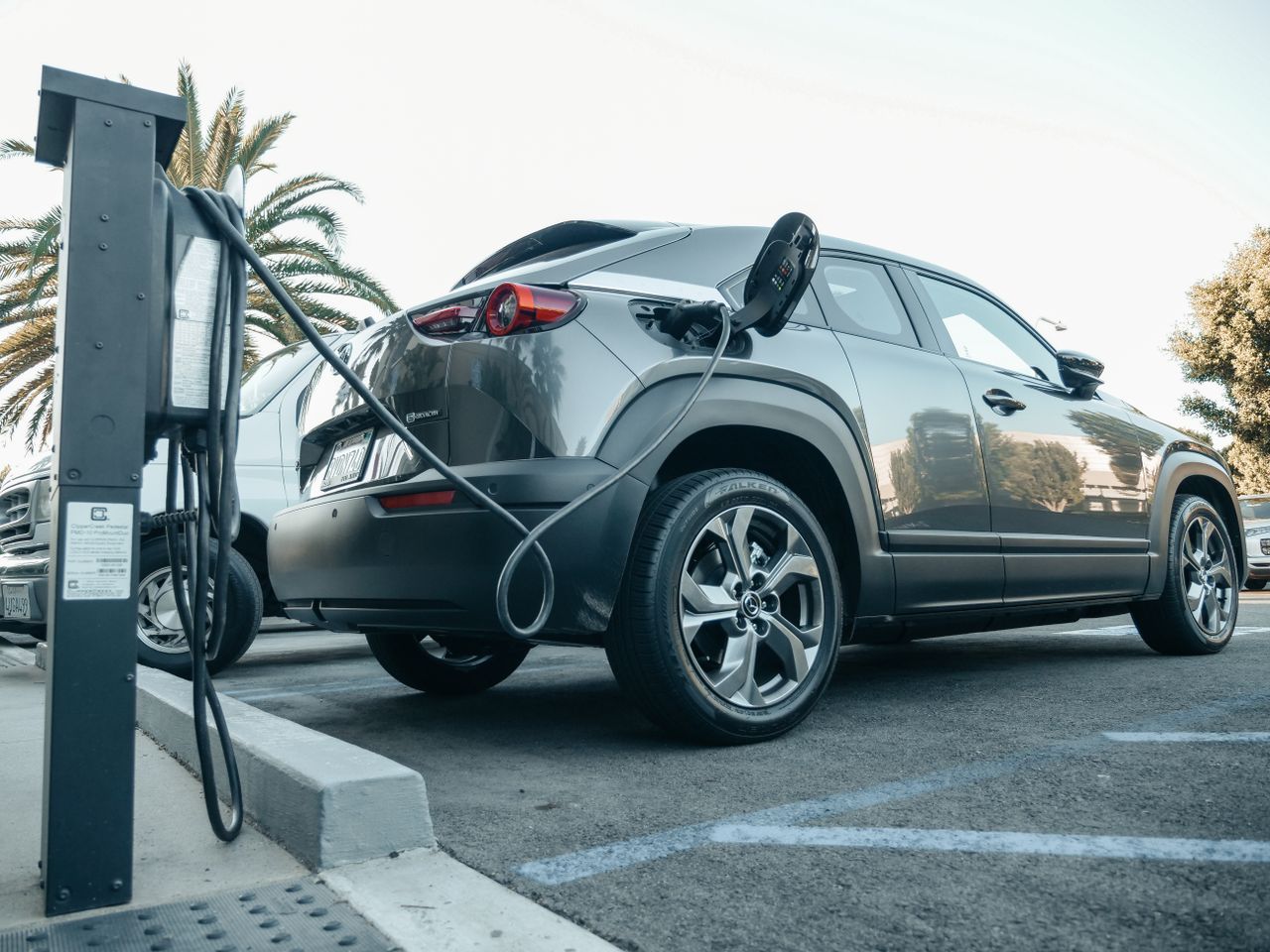
Set up EV Manufacturing in India: Entities, Licenses, Incentives
Written By

Treelife
Share
-
Link copied to clipboard!https://treelife.in/legal/set-up-ev-manufacturing-in-india/

-

-

-

-

Blog Content Overview
- 1 What does the EV manufacturing setup process in India actually involve?
- 2 Which entity structure and FDI route should an EV manufacturer use?
- 3 What licenses and environmental clearances does an EV plant need before production?
- 4 Which central government incentive schemes apply to EV manufacturers?
- 5 How do state EV policies add to central incentives?
- 6 What compliance continues after the plant starts production?
- 7 How is an EV manufacturing company taxed in India?
- 8 What does the setup timeline and cost actually look like?
- 9 Where does a promoter actually start?
- 10 Common mistakes that cost EV manufacturers time and money
- 11 Case Study & Practitioner Note
- 12 What is the minimum investment required to set up EV manufacturing in India?
- 13 Frequently asked questions
- 14 Regulatory references
Setting up EV manufacturing in India in 2026 means running two parallel tracks at once: a standard industrial setup track (entity, land, factory license, environmental clearance, labour compliance) and an EV-specific track (battery safety certification, ARAI or iCAT homologation, PLI scheme eligibility, and Battery Waste Management EPR registration). Installed EV production capacity in India has crossed two million units a year, and several PLI-backed battery cell plants are now producing cells at volume. The opportunity is real, but the regulatory sequencing is what determines whether a plant is producing on schedule or stuck waiting on a clearance it should have filed six months earlier. This article walks through the entity structure, the licensing stack, the applicable central and state incentives, and the tax position, in the order a promoter actually needs to act on them.
What licenses does an EV manufacturing plant need in India?
An EV manufacturing plant needs, at minimum, a factory license under the Factories Act 1948, environmental clearance under the EIA Notification 2006 (typically Category B1, cleared by the State Environment Impact Assessment Authority), consent to establish and operate from the State Pollution Control Board, fire and building NOCs from the local municipal authority, BIS certification for the battery pack, and CMVR type approval (homologation) from ARAI or iCAT before any vehicle can be sold.
What does the EV manufacturing setup process in India actually involve?
The process runs across three phases that overlap rather than run strictly sequentially: entity and site (weeks 1 to 12), construction and clearances (months 3 to 18, depending on plant category), and production readiness (homologation, BIS certification, and scheme registration, typically the final 3 to 6 months before commercial production).
A promoter setting up EV manufacturing in India needs to decide, before anything else, what tier of the value chain it is entering. This changes almost everything downstream:
- Vehicle assembly (2W, 3W, 4W): lower capital intensity, faster environmental clearance category in most cases, homologation-heavy compliance
- Battery pack assembly: clean-room requirements, cell sourcing (imported or domestic), BIS and AIS 156 certification, EPR registration for battery waste
- Advanced Chemistry Cell (ACC) manufacturing: the most capital-intensive tier, eligible for the dedicated PLI-ACC outlay of Rs 18,100 crore targeting 50 GWh of domestic capacity, and typically a Category A project under the EIA Notification 2006 given scale
- Component and sub-system supply: motors, power electronics, BMS, thermal management, generally lighter compliance but still eligible for PLI-Auto under the Advanced Automotive Technology (AAT) products list
Each tier has a different licensing burden, different scheme eligibility, and a different capital-to-timeline ratio. Get this classification wrong at the outset and the environmental clearance category, the factory license conditions, and the scheme application all need to be redone.
Site selection is worth deciding before the entity is incorporated, not after, since it determines which SEIAA, which State Pollution Control Board, and which state single-window agency the promoter deals with for the next 18 months. The established automotive and EV clusters, with the existing Tier-1 and Tier-2 supplier density that materially eases domestic value addition, are Pune-Chakan and Sanand for integrated 4W and component manufacturing, Chennai-Sriperumbudur and Hosur for 2W, 3W, and component supply, and Pithampur and Manesar-Bawal for component and assembly plants serving the north Indian market. A site outside these clusters is not disqualifying, but it usually means a longer vendor development timeline before the DVA threshold under PLI can realistically be hit.
Table: indicative capex by vehicle category and configuration
| Category | Typical volume range | Indicative capex |
|---|---|---|
| Electric two-wheeler (2W) | 50,000 to 500,000 units/year | Rs 100 to 800 crore |
| Electric three-wheeler (3W) | 20,000 to 200,000 units/year | Rs 50 to 300 crore |
| Electric four-wheeler (4W) assembly | 50,000 to 200,000 units/year | Rs 800 to 4,000 crore |
| Integrated 4W OEM (body-in-white to assembly) | 100,000 to 500,000 units/year | Rs 3,000 to 15,000 crore |
| Electric bus or commercial vehicle | 1,000 to 20,000 units/year | Rs 300 to 2,000 crore |
| Battery cell gigafactory | 1 to 10 GWh/year | Rs 3,000 to 15,000 crore per GWh |
The capex figure is only half the decision. The configuration choice, assembly versus integrated manufacturing, has a direct legal consequence: an assembly plant that procures body panels, battery packs, and motors from external suppliers and only integrates them has a structurally harder path to PLI domestic value addition thresholds than an integrated plant performing stamping, body-in-white welding, and powertrain integration in-house. A promoter should model its DVA trajectory against its intended configuration before filing the PLI application, not after, since a scheme rejection or downgrade on DVA grounds cannot easily be cured once the plant is already committed to an assembly-heavy vendor structure.
Which entity structure and FDI route should an EV manufacturer use?
A private limited company incorporated under the Companies Act 2013 is the standard vehicle for EV manufacturing in India, and 100% foreign direct investment is permitted under the automatic route for the automobile sector, meaning no prior Reserve Bank of India (RBI) or government approval is needed for the investment itself.
For a foreign promoter, three structuring questions determine the rest of the setup:
- Wholly owned subsidiary or joint venture. A wholly owned subsidiary gives full control over intellectual property, sourcing, and scheme applications filed in the entity’s own name. A joint venture with an Indian component supplier or auto major shortens the land acquisition and vendor onboarding timeline but requires the shareholders’ agreement to address scheme benefit allocation and exit terms upfront, since PLI and SPMEPCI benefits attach to the applicant entity, not to individual shareholders.
- Greenfield or brownfield. A brownfield acquisition of an existing manufacturing shed can shorten the environmental clearance timeline if the shed already holds a valid consent to operate, but any change in product mix still requires environmental clearance under the EIA Notification 2006, since a change in product mix in an existing manufacturing unit is itself a triggering event for clearance.
- FDI reporting. Even under the automatic route, the Indian entity must report the investment to the RBI through Form FC-GPR within 30 days of share allotment, and the foreign investment must comply with the sectoral conditions and pricing guidelines under the Foreign Exchange Management Act (FEMA) 1999 and the Consolidated FDI Policy. This is a compliance step, not an approval gate, but missing the FC-GPR filing window attracts compounding proceedings before the RBI.
Table: entity structuring options for EV manufacturing in India
| Structure | FDI route | Control | Typical timeline to operational entity |
|---|---|---|---|
| Wholly owned subsidiary (greenfield) | 100% automatic | Full | 2 to 3 months for incorporation, plus site and clearance timeline |
| Wholly owned subsidiary (brownfield acquisition) | 100% automatic | Full | 1 to 2 months for incorporation, faster on clearances if shed is pre-approved |
| Joint venture with Indian manufacturer | 100% automatic | Shared, governed by SHA | 2 to 4 months for entity plus JV documentation |
| Branch or liaison office | Not applicable, no manufacturing permitted | None for production | Not suitable for manufacturing activity |
What licenses and environmental clearances does an EV plant need before production?
Before an EV plant can begin construction, it needs consent to establish from the State Pollution Control Board and, for most manufacturing categories, prior environmental clearance under the EIA Notification 2006, issued either by the State Environment Impact Assessment Authority (SEIAA) for Category B1 projects or by the Ministry of Environment, Forest and Climate Change for Category A projects.
Automobile manufacturing and integrated facility units have been cleared as Category B1 projects by SEIAA in recent precedent, which keeps the process at the state level rather than escalating to the central Expert Appraisal Committee, provided the project does not fall within a critically polluted area or trigger the general conditions under the notification. A larger ACC cell manufacturing facility, given its scale and chemical processing footprint, more commonly sits in Category A and is appraised centrally.
The full licensing stack, in the sequence most promoters file it:
- Company incorporation and PAN/TAN (MCA, via SPICe+)
- Land allotment or purchase, with change of land use (CLU) if the site is not already zoned industrial
- Consent to establish (CTE) from the State Pollution Control Board, before construction begins
- Environmental clearance under the EIA Notification 2006, where the schedule item applies
- Factory license under the Factories Act 1948 (state-specific, via the Chief Inspector of Factories)
- Fire NOC and building completion certificate from the local municipal or industrial development authority
- Consent to operate (CTO) from the State Pollution Control Board, before commercial production starts
- Labour registrations: Shops and Establishments, EPF, ESI, and state-specific labour welfare fund registrations
- BIS certification for the battery pack and charger, under the applicable Indian Standard
- CMVR type approval (homologation) from ARAI or iCAT, mandatory before any vehicle model can be sold
- Battery Waste Management Rules EPR registration, on the CPCB portal, as a producer obligation under Extended Producer Responsibility
Table: core licenses for an EV manufacturing plant
| Approval | Issuing authority | Governing law | Typical lead time |
|---|---|---|---|
| Environmental clearance | SEIAA (Cat B1) or MoEFCC (Cat A) | EIA Notification 2006 | 4 to 12 months, category dependent |
| Consent to establish / operate | State Pollution Control Board | Water Act 1974, Air Act 1981 | 2 to 4 months each |
| Factory license | Chief Inspector of Factories (state) | Factories Act 1948 | 1 to 3 months |
| CMVR homologation | ARAI / iCAT | Central Motor Vehicles Rules 1989 | 3 to 6 months per model |
| Battery EPR registration | Central Pollution Control Board | Battery Waste Management Rules 2022 | 4 to 8 weeks |
Missing the environmental clearance stage before starting civil construction is the single most common cause of stop-work orders in this sector; the EIA Notification 2006 is explicit that no activity covered under the schedule can commence before grant of clearance, and this has been upheld repeatedly before the National Green Tribunal.
Two licenses are easy to miss because they are not specific to the EV manufacturing checklists most promoters start from.
Petroleum or explosives licence for the paint shop. Any plant running a paint shop, which most vehicle assembly plants do, needs a licence under the Petroleum Act 1934 or the Explosives Act 1884, issued by the Petroleum and Explosives Safety Organisation (PESO), given the flammable solvents and coatings handled. This is frequently missed because it sits outside the standard factory and pollution licensing checklist, and PESO clearance timelines do not compress well if raised late.
The homologation standard set goes beyond AIS 156. AIS 156 covers battery safety, but a full vehicle type approval under the Central Motor Vehicles Rules 1989 also draws on AIS 038 (electric propulsion for cars), AIS 049 (battery-operated vehicles), IS 17017 (EV connectors), and IS 17691 (EV cables), with AIS 004 governing the type approval procedure itself. Planning homologation against AIS 156 alone, without accounting for the connector, cable, and propulsion standards specific to the vehicle category, is a common cause of a return-for-resubmission at ARAI or iCAT.
A further point on the pollution consent: paint shop effluent typically has to meet Zero Liquid Discharge (ZLD) design as directed by the Central Pollution Control Board for painting operations, and this is usually a condition written into the consent to establish, not a separate approval, which means it needs to be engineered into the plant design before the CTE application is filed, not added afterward.
In practice, most of this stack is not filed department by department. The National Single Window System (NSWS), run by DPIIT with Invest India, lets a promoter run a Know Your Approvals (KYA) check to generate the specific list of central and state approvals its plant needs, then apply for and track most of them through one login, with a common registration form that auto-populates repeated fields across approvals. It does not replace the substantive approval process (SEIAA still decides the environmental clearance, the State Pollution Control Board still decides the CTE and CTO), but it removes the coordination overhead of chasing each department separately, and is the practical starting point for a first-time promoter rather than a nice-to-have.
At the state level, the application is typically routed through a state single-window agency alongside NSWS: MIDC in Maharashtra, Guidance Tamil Nadu (formerly TIDCO), iNDEXTb in Gujarat, TS-iPASS in Telangana, and Invest UP in Uttar Pradesh are the state nodal bodies most EV promoters end up dealing with directly for land allotment and expedited state clearances.
Which central government incentive schemes apply to EV manufacturers?
Four central schemes currently apply to EV manufacturing in India, and a single plant is often eligible under more than one, provided it meets each scheme’s separate domestic value addition and investment thresholds.
PLI Scheme for Automobile and Auto Components carries a budgetary outlay of Rs 25,938 crore (revised from an earlier Rs 26,058 crore approval), targeting Advanced Automotive Technology products including EVs, and offering a 13 to 18% incentive on incremental sales of eligible components and vehicles manufactured in India, contingent on meeting domestic value addition thresholds.
PLI Scheme for Advanced Chemistry Cell (ACC) battery storage carries an outlay of Rs 18,100 crore, targeting 50 GWh of domestic cell manufacturing capacity, with disbursements linked to committed capacity and localisation milestones. A mix of battery and auto majors have been awarded capacity under this scheme, spanning both established battery manufacturers and new entrants building dedicated cell capacity.
Scheme to Promote Manufacturing of Electric Passenger Cars in India (SPMEPCI/SMEC), notified by the Ministry of Heavy Industries on 15 March 2024 with operational guidelines released in June 2025, is aimed at global entrants rather than domestic-scale players. It requires a minimum investment commitment of Rs 4,150 crore (approximately USD 500 million) within three years, global group revenue of at least Rs 10,000 crore and global fixed assets of at least Rs 3,000 crore, and domestic value addition of 25% within three years rising to 50% within five years. In exchange, approved applicants get a reduced customs duty of 15% (against the standard higher rate) on completely built EV units valued at USD 35,000 CIF or above, capped at 8,000 units a year and a total duty concession of the lower of Rs 6,484 crore or the committed investment, backed by a bank guarantee equal to the investment commitment or the duty foregone.
PM E-DRIVE Scheme, launched in October 2024 with an outlay of Rs 10,900 crore running through 31 March 2026, replaced FAME II and supports electric two-wheelers, three-wheelers, ambulances, trucks, e-buses for state transport undertakings, and charging infrastructure. To register as an approved OEM under PM E-DRIVE, a manufacturer needs an Indian-incorporated entity, a valid CMVR type approval from ARAI or iCAT, minimum domestic value addition of 50% for e-2W and e-3W categories, manufacturing or assembly facilities located in India, and compliance with AIS 156 battery safety standards.
Registration under PM E-DRIVE is done model by model, not at the company level: each eligible vehicle model has to be separately registered on the scheme portal before its sales can draw the incentive, so a manufacturer planning multiple variants needs to plan the registration queue alongside the homologation queue, not after it.
Table: central schemes for EV manufacturing, at a glance
| Scheme | Administering body | Headline benefit | Eligibility threshold |
|---|---|---|---|
| PLI Auto (AAT products) | Ministry of Heavy Industries | 13 to 18% incentive on incremental sales | DVA thresholds, minimum investment commitment |
| PLI ACC | Ministry of Heavy Industries / DHI | Capacity-linked disbursement toward 50 GWh target | Committed cell capacity, localisation milestones |
| SPMEPCI (SMEC) | Ministry of Heavy Industries | 15% customs duty on CBU imports for 5 years | Rs 4,150 cr minimum investment, 25 to 50% DVA |
| PM E-DRIVE | Ministry of Heavy Industries | Demand-side subsidy on eligible vehicle sales | Indian entity, ARAI/iCAT approval, 50% DVA (2W/3W) |
Alongside these, GST on electric vehicles was reduced from 12% to 5%, which sits at the sale end of the value chain but materially affects the pricing model a manufacturer builds into its production plan.
A cell or battery manufacturer also needs to plan its critical mineral sourcing separately from its scheme applications. Lithium, cobalt, nickel, and rare earth inputs are overwhelmingly imported, and the Critical Minerals Mission, approved by the Cabinet in January 2025, is the government’s upstream response, alongside customs duty exemptions on the import of critical minerals used in EV cell components. A manufacturer’s DVA calculation and its import duty planning should be modelled together, since cell-grade material imports carry their own HSN classification and duty treatment that sits outside the vehicle-level customs concessions under SPMEPCI.
How do state EV policies add to central incentives?
State EV manufacturing policies stack on top of central schemes and typically add capital subsidy on plant and machinery, SGST reimbursement over a defined period, stamp duty exemption on land, and dedicated EV industrial parks. Tamil Nadu, Maharashtra, Gujarat, Telangana, and Uttar Pradesh currently run the most active state EV manufacturing policies.
Because state incentives change with each budget cycle and are typically administered through a memorandum of understanding signed at the time of investment, the specific percentage and cap should be verified against the current state industrial policy notification before a promoter finalises the plant location, rather than relied on from a prior year’s figure. What stays broadly consistent across these states is the structure of the offer:
- Capital subsidy on eligible fixed capital investment, usually staged against employment and investment milestones
- SGST reimbursement for a fixed number of years, capped as a percentage of fixed capital investment
- Land allotment at concessional rates in designated industrial corridors or EV-specific parks
- Stamp duty and registration fee exemption on land purchase or lease
- Power tariff subsidy or exemption from electricity duty for a defined period
- Beyond the five states covered above, Karnataka, Andhra Pradesh, Kerala, and Delhi also run active EV manufacturing incentive policies, and several OEM-scale investments have already been anchored in Tamil Nadu, Maharashtra, and Gujarat given their existing component supplier density.
Table: state EV policy instruments, illustrative
| State | Capital subsidy | SGST reimbursement | Land or infrastructure support |
|---|---|---|---|
| Tamil Nadu | Yes, staged against investment and employment | Yes, multi-year window | Dedicated EV and battery industrial parks |
| Maharashtra | Yes, under state EV policy | Yes, multi-year window | Concessional land in designated corridors |
| Gujarat | Yes, under state EV and ACC policy | Yes, multi-year window | Land at concessional rates, port-linked sites |
| Telangana | Yes, under state EV policy | Yes, multi-year window | EV-specific industrial zones near Hyderabad |
| Karnataka | Yes, under state EV and ACC cell policy | Yes, capped reimbursement | Land support in designated clusters |
Treat this table as directional. The applicable percentage, cap, and window for each instrument should be verified against the specific state’s current industrial policy notification before the plant location is finalised, since these figures are revised with each state budget cycle.
A promoter comparing states should treat the state incentive as a secondary decision layer after logistics, port access, component ecosystem density, and labour availability, since a marginally richer subsidy in a state without an established component supplier base often costs more in freight and vendor development than it saves in incentive value.
What compliance continues after the plant starts production?
Once production starts, an EV manufacturer carries ongoing obligations that differ meaningfully from a conventional IC-engine plant: battery-specific safety compliance, extended producer responsibility for battery waste, periodic scheme performance reporting, and continued homologation for every model variant introduced.
AIS 156 and battery safety. Every battery pack manufactured or assembled must meet AIS 156 (Automotive Industry Standard) safety requirements before the vehicle can receive CMVR type approval. This covers thermal runaway propagation, mechanical shock, and ingress protection testing, and non-compliance is the most common reason a model’s homologation application is returned for resubmission.
Battery Waste Management Rules, 2022, EPR. As a battery producer, the manufacturer must register on the CPCB’s EPR portal and meet annual collection and recycling targets for batteries placed on the market, with penalties under the Environment (Protection) Act 1986 for shortfall against the committed EPR target.
PLI and SPMEPCI performance reporting. Scheme benefits are disbursed against actual, verified sales and domestic value addition, not against the investment commitment alone. This means the finance and compliance function has to maintain a domestic value addition calculation methodology that will withstand audit by the scheme’s nodal agency, typically the Ministry of Heavy Industries or its designated project management agency.
Continued homologation. Every new variant, battery chemistry change, or significant design revision triggers a fresh or amended CMVR type approval. A manufacturer planning multiple variants in year one should build the ARAI or iCAT testing cycle into the product roadmap, not treat it as a one-time gate.
How is an EV manufacturing company taxed in India?
A new manufacturing company incorporated on or after 1 October 2019 and commencing production before the applicable sunset date can opt for the concessional corporate tax rate of 15% (plus surcharge and cess) under section 115BAB of the Income Tax Act 1961, provided it does not use previously used plant and machinery beyond the permitted threshold and does not engage in specified excluded businesses. This is materially lower than the standard corporate rate and is the single most consequential tax election most EV manufacturing entities make at incorporation.
Beyond corporate tax, three points matter for an EV plant’s tax structuring:
- GST on inputs and capital goods. Input tax credit is available on capital goods and raw materials used in manufacturing, but the inverted duty structure between a 5% output GST rate on EVs and higher input GST rates on some components can create a working capital drag through accumulated input tax credit, which needs to be actively managed through refund claims.
- Customs duty on capital equipment. Depending on the HSN classification, import of specialised manufacturing equipment (cell coating lines, battery formation and testing equipment) may attract concessional customs duty under project import benefits, subject to registration of the contract with customs authorities before import.
- Transfer pricing. For a wholly owned subsidiary of a foreign parent, intercompany transactions for technology licensing, component imports, and management fees need arm’s length pricing documentation under section 92 of the Income Tax Act 1961, particularly where the parent also supplies cells, motors, or BMS units to the Indian entity.
- How should an EV manufacturing project be financed? Most EV manufacturing projects in India are financed at a debt-equity ratio of roughly 60:40 to 70:30, with term loans arranged through a bank consortium, and the financial model needs to hold up to lender scrutiny before it holds up to scheme scrutiny. Three points shape the financing conversation specifically for EV manufacturing:
- PLI and state incentives are modelled as cash flow, not as a discount. Lenders underwrite the plant on the base project economics and treat PLI, SPMEPCI, and state capital subsidy disbursement as a separate, milestone-linked cash inflow, since these are conditional on DVA and investment verification rather than guaranteed. A financial model that assumes incentive cash flow as certain, undiscounted revenue is the most common reason a term sheet gets renegotiated at the credit committee stage.
- Working capital is disproportionately battery-driven. Battery cost typically makes up 30 to 45% of an EV’s bill of materials, and cell price volatility, along with the accumulated input tax credit position created by the inverted 5% output GST versus higher input GST rates, both need to be built into the working capital facility, not treated as a contingency line.
- Return expectations should be benchmarked realistically. Well-structured EV manufacturing projects at appropriate scale typically target a project IRR in the 12 to 18% range with a payback period of 6 to 10 years, varying by vehicle segment and the extent of PLI qualification achieved. Policy stacking across central and state incentives, when the DVA and investment conditions are genuinely met, can move project IRR by several percentage points, which is why the scheme eligibility work should sit inside the financial model from the first draft, not bolted on afterward.
What does the setup timeline and cost actually look like?
A greenfield EV assembly plant in India typically takes 12 to 18 months from entity incorporation to commercial production, while a battery cell (ACC) manufacturing facility, given its scale and Category A environmental clearance, more commonly runs 18 to 30 months.
Table: indicative setup timeline by phase
| Phase | Key activities | Typical duration |
|---|---|---|
| Entity and site | Incorporation, FDI reporting, land allotment or purchase, CLU | 2 to 4 months |
| Pre-construction clearances | CTE, environmental clearance (Cat B1), factory license application | 4 to 8 months |
| Construction and installation | Civil works, plant and machinery installation, utilities | 6 to 12 months |
| Pre-production compliance | CTO, BIS certification, ARAI/iCAT homologation, EPR registration | 3 to 6 months (can overlap construction) |
| Scheme registration | PLI/SPMEPCI/PM E-DRIVE application and approval | 3 to 6 months (file early, runs parallel) |
Capital cost varies enormously by tier: a component or sub-system assembly line can be commissioned for single-digit crores, a two-wheeler or three-wheeler assembly plant typically requires Rs 50 to Rs 300 crore depending on capacity, and a passenger vehicle plant or an ACC cell gigafactory sits in the thousands of crores, which is precisely the scale the SPMEPCI and PLI-ACC schemes are designed around.
Where does a promoter actually start?
For a promoter who has decided to proceed, the first 90 days should run roughly in this order, since each step unlocks or informs the next:
- Lock the tier and site cluster. Decide vehicle category or component tier and shortlist a cluster (Pune-Chakan, Sanand, Chennai-Sriperumbudur, Hosur, Pithampur, or Manesar-Bawal for most entrants) before incorporating, since this determines the SEIAA, the State Pollution Control Board, and the state single-window agency the entity will deal with.
- Incorporate and report FDI, if applicable. Register the private limited company, apply for PAN and TAN, and if there is foreign investment, plan the FC-GPR filing for within 30 days of share allotment.
- Run a Know Your Approvals check on NSWS. This generates the specific central and state approval list for the plant, rather than relying on a generic checklist, and is the fastest way to see the full sequence before land is committed.
- File land allotment with the state single-window agency and CTE with the State Pollution Control Board in parallel. These two do not need to wait on each other, and both need to be filed before civil construction starts.
- Start the environmental clearance application alongside, not after, the CTE. Category B1 clearances, where applicable, run through SEIAA and are frequently a precondition the Pollution Control Board checks before granting CTE, so starting it late is what causes the schedule to slip by months rather than weeks.
- Model the DVA trajectory before applying to PLI, SPMEPCI, or PM E-DRIVE. Decide assembly versus integrated configuration first, since this decision determines whether the DVA threshold is realistically achievable, and build the scheme application against a sourcing plan that can survive scheme audit.
- Queue homologation and BIS certification to run in parallel with construction, not after commissioning, given ARAI or iCAT testing cycles and BIS certification for the battery pack both take months and are a precondition for CMVR type approval.
This sequencing is where most of the avoidable delay in EV manufacturing setup actually sits, not in any single approval being slow, but in approvals being filed one after another when several of them can run at the same time.
Common mistakes that cost EV manufacturers time and money
- Starting construction before environmental clearance. The EIA Notification 2006 bars commencement of any covered activity before clearance is granted, and this has been enforced by the National Green Tribunal against manufacturers who assumed a pending application was sufficient. A stop-work order at the construction stage costs far more in idle capital and penalty exposure than the delay of waiting for clearance.
- Filing FC-GPR late. Foreign investment under the automatic route does not need prior approval, but the reporting to RBI through Form FC-GPR within 30 days of allotment is mandatory. Late filing attracts compounding proceedings under FEMA 1999, an avoidable cost for what is otherwise a routine filing.
- Treating domestic value addition as a self-certified figure. PLI, SPMEPCI, and PM E-DRIVE all disburse against verified DVA calculations, not the promoter’s internal estimate. Manufacturers that build their component sourcing plan without a documented, auditable DVA methodology from day one frequently find their claimed DVA does not survive scheme audit, delaying or reducing disbursement.
- Underestimating the homologation cycle for every variant. A model change, battery chemistry swap, or motor upgrade each triggers fresh CMVR testing at ARAI or iCAT. Manufacturers that plan a multi-variant launch in year one without building this testing queue into the product roadmap routinely see launch dates slip by a full quarter or more.
- Ignoring EPR registration until after the first production run. Battery Waste Management Rules EPR registration is a producer obligation that should be filed alongside, not after, the consent to operate. Retroactive registration attracts scrutiny on the collection target calculation for the period the manufacturer was unregistered.
Case Study & Practitioner Note
Teams apply for PLI or SPMEPCI benefits before their domestic value addition methodology has been stress-tested against the scheme’s own calculation framework under the Ministry of Heavy Industries guidelines, and then spend months reconciling their internal cost sheets with what the scheme’s project management agency will actually accept as eligible investment. A second, quieter pattern: promoters treat the environmental clearance and the factory license as parallel-track paperwork rather than a dependency chain, when in practice a Category B1 clearance under the EIA Notification 2006 is frequently a precondition the State Pollution Control Board checks before issuing consent to establish. Building the compliance calendar backward from the target production date, rather than forward from incorporation, is the single change that saves the most time across a typical 15-month setup.
Situation: A Series C auto-component manufacturer based in Pune, expanding into battery pack assembly for two-wheelers.
Challenge: The promoter had committed to a state MoU for capital subsidy before finalising its domestic value addition plan, was unclear whether its existing factory license needed amendment for the product mix change, and had not started BIS certification for the battery pack.
What Treelife did: Restructured the DVA sourcing plan against PLI-Auto’s calculation methodology before the state MoU was signed, filed the environmental clearance amendment for the product mix change alongside the factory license amendment rather than sequentially, and ran the BIS and AIS 156 certification process in parallel with plant commissioning.
Outcome: Commercial production started five months ahead of the promoter’s original internal timeline, and the entity’s DVA claim under PLI-Auto was accepted without a query on first submission.
What is the minimum investment required to set up EV manufacturing in India?
There is no single minimum, it depends on the scheme and tier. A component or assembly-line entrant needs no minimum investment to incorporate and operate, but access to SPMEPCI (for global passenger EV entrants) requires a committed investment of Rs 4,150 crore within three years, while PLI-Auto and PLI-ACC apply their own, generally lower, capacity-linked investment thresholds set out in the respective scheme guidelines.
Frequently asked questions
Q: Is 100% FDI allowed in EV manufacturing in India?
A: Yes. The automobile sector, which covers EV manufacturing, permits 100% foreign direct investment under the automatic route, meaning no prior government approval is needed for the investment, only post-investment reporting to the RBI through Form FC-GPR under FEMA 1999.
Q: What is the GST rate on electric vehicles in India?
A: 5%, reduced from the earlier 12% rate, applicable to electric vehicles as a category, distinct from the higher GST and cess applicable to IC-engine vehicles.
Q: How long does it take to get environmental clearance for an EV manufacturing plant?
A: For a Category B1 project cleared by the SEIAA, 4 to 8 months is typical if the application is complete and the site does not trigger general conditions under the EIA Notification 2006. Category A projects, appraised centrally, typically take longer given the additional scoping and public consultation stages.
Q: Can a startup apply for the PLI scheme for EVs, or is it only for large manufacturers?
A: PLI-Auto is open to any eligible investor meeting the scheme’s investment and domestic value addition thresholds, which are lower than SPMEPCI’s. SPMEPCI, by contrast, is structured for established global players given its global revenue and fixed asset eligibility conditions.
Q: What is domestic value addition (DVA) and how is it calculated?
A: DVA measures the proportion of a vehicle or battery’s value that is added within India, calculated against a methodology set out in the relevant scheme guidelines (PLI-Auto, PLI-ACC, SPMEPCI, or PM E-DRIVE each define this slightly differently). It should be modelled and documented before sourcing decisions are finalised, since scheme benefits are disbursed against verified, not estimated, DVA.
Q: Does an EV manufacturer need BIS certification before selling vehicles?
A: Yes, for the battery pack and charger, under the applicable Indian Standard, and this certification is generally a precondition for CMVR type approval from ARAI or iCAT, without which the vehicle cannot be legally sold.
Q: What happens if a manufacturer starts construction before receiving environmental clearance?
A: The EIA Notification 2006 prohibits commencement of covered activity before clearance is granted. Violations have resulted in stop-work orders enforced by the National Green Tribunal, and retrospective clearance is not a substitute for prior clearance under settled precedent.
Q: How does the SPMEPCI scheme differ from the PLI scheme for EVs?
A: SPMEPCI is specifically for electric passenger cars and targets global entrants with a high minimum investment (Rs 4,150 crore) in exchange for reduced customs duty on completed vehicle imports during the ramp-up period. PLI-Auto is broader, covering multiple EV and component categories, with incentive linked to incremental domestic sales rather than customs duty relief.
Q: Can a foreign OEM import completely built EVs while its Indian plant is under construction?
A: Under SPMEPCI, an approved applicant can import CBUs at a reduced 15% customs duty (against higher standard rates) for up to five years, capped at 8,000 units annually, while its domestic manufacturing facility is being built out to meet the DVA milestones.
Q: What labour registrations does an EV manufacturing plant need?
A: Shops and Establishments registration, Employees’ Provident Fund (EPF) registration, Employees’ State Insurance (ESI) registration where applicable by employee count and wage threshold, and state-specific labour welfare fund registration, alongside the factory license under the Factories Act 1948.
Q: Is a joint venture or wholly owned subsidiary better for a foreign EV manufacturer entering India?
A: A wholly owned subsidiary preserves full control over scheme applications and intellectual property, given both PLI and SPMEPCI benefits attach to the applicant entity. A joint venture with an established Indian component supplier can shorten vendor onboarding and land acquisition timelines, but the shareholders’ agreement needs to explicitly address how scheme benefits and DVA credit are allocated between the parties.
Q: What is Extended Producer Responsibility (EPR) for EV batteries?
A: Under the Battery Waste Management Rules 2022, a battery producer, including an EV manufacturer that assembles battery packs, must register with the Central Pollution Control Board and meet annual collection and recycling targets for batteries placed on the market, with the obligation attaching from the start of commercial production.
Q: Does an NRI or an Indian promoter with an NRI shareholder face different FDI conditions for EV manufacturing?
A: Investment by non-resident Indians on a non-repatriation basis is treated as domestic investment, not foreign investment, for FDI policy purposes, and does not count toward the sectoral FDI cap calculation, though the 100% automatic route makes this distinction largely academic for EV manufacturing given there is no cap to test against.
Q: What if a manufacturer fails to meet the domestic value addition milestone under a scheme?
A: Consequences depend on the specific scheme. Under SPMEPCI, failure to meet the DVA milestone can trigger invocation of the bank guarantee submitted at approval stage. Under PLI-Auto and PLI-ACC, shortfall against committed capacity or DVA typically reduces or forfeits the incentive disbursement for the relevant tranche, rather than triggering a guarantee invocation, though this should be verified against the specific scheme guideline in force at the time of application.
Q: Does an assembly-only EV plant qualify for the same PLI benefits as an integrated plant?
A: Both can apply, but an assembly-only plant, which procures body panels, battery packs, and motors from external suppliers, generally finds it structurally harder to clear the domestic value addition thresholds than an integrated plant performing body-in-white, paint, and powertrain integration in-house. The DVA trajectory should be modelled against the intended configuration before the PLI application is filed.
Q: Does an EV manufacturing plant need an explosives or petroleum licence?
A: Yes, if the plant runs a paint shop, which most vehicle assembly plants do. This requires a licence under the Petroleum Act 1934 or the Explosives Act 1884, issued by the Petroleum and Explosives Safety Organisation (PESO), separate from the standard factory and pollution control licensing checklist.
Q: What import duty applies to lithium, cobalt, and other battery raw materials?
A: Customs duty exemptions apply to the import of critical minerals used in EV cell components, alongside the broader Critical Minerals Mission approved by the Cabinet in January 2025 to support upstream access to lithium, cobalt, nickel, and rare earths. The applicable HSN classification and duty treatment should be verified separately from the vehicle-level customs concessions under SPMEPCI.
Q: Is there a single-window system for EV manufacturing approvals in India?
A: Yes. The National Single Window System (NSWS), run by DPIIT with Invest India, offers a Know Your Approvals check that generates the specific central and state approval list for a given plant, and lets the promoter apply for and track most of them through one login. It does not replace the underlying regulator’s decision, SEIAA still decides the environmental clearance, for instance, but it removes most of the coordination overhead of approaching each department separately.
Regulatory references
- Foreign Exchange Management Act 1999, and Consolidated FDI Policy (automatic route, automobile sector)
- Environment Impact Assessment Notification 2006, issued under the Environment (Protection) Act 1986 (Category A and B1)
- Factories Act 1948 (state factory license)
- Battery Waste Management Rules 2022 (Extended Producer Responsibility for battery producers)
- Central Motor Vehicles Rules 1989 (CMVR type approval / homologation)
- Automotive Industry Standards AIS 038, AIS 049, AIS 004, and Indian Standards IS 17017, IS 17691 (EV-specific homologation standards)
- Petroleum Act 1934 and Explosives Act 1884, administered by the Petroleum and Explosives Safety Organisation (PESO), for paint shop licensing
- Critical Minerals Mission, approved by the Union Cabinet, January 2025
- Automotive Industry Standard 156 (AIS 156, battery safety)
- Income Tax Act 1961, section 115BAB (concessional 15% corporate tax rate for new manufacturing companies)
About the Author
Share
-
Link copied to clipboard!https://treelife.in/legal/set-up-ev-manufacturing-in-india/

-

-

-

-

Treelife

Treelife Team | support@treelife.in
We are a legal and finance firm with a deep focus on the startup ecosystem. We offer a wide range of services, including Virtual CFO, Legal Support, Tax & Regulatory, and Global Expansion assistance.
Our goal at Treelife is to provide you with peace of mind and ease in business.

Garima Mitra
Co-founder
Spearheads Transactions, Contracts, and Compliance verticals at Treelife, combining expertise in business law with a focus on startup legal and governance.

Pooja Savla
Principal Associate | Transactions
Specialises in transaction advisory, mergers and acquisitions, investment structuring, and corporate legal matters for startups and growth-stage companies.
We Are Problem Solvers. And Take Accountability.
Related Posts

Bonus Issue of Shares under Section 63: Conditions, Reserves
A bonus issue converts a company's accumulated reserves into paid-up share capital and hands the additional shares to existing shareholders...
Learn More

Appointment and Resignation of a Director: DIR-12, DIR-11, Consent
Every change to a company's board, whether a new appointment, a resignation, or a designation change, has to be reported...
Learn More
Holding Company Structure in India: Compliance, Investment, Tax
A holding company structure lets a promoter group consolidate ownership of several operating businesses under one entity, ring-fence liability, and...
Learn More

PAS-6 Share Reconciliation: Applicability, Half yearly filing, Penalties
Form PAS-6 is the half-yearly Reconciliation of Share Capital Audit Report that reconciles a company's internal share register with the...
Learn More

Capital Reduction under Section 66: NCLT Process, Creditor consent, Timeline
A company that reduces its share capital under section 66 of the Companies Act, 2013 is permanently cutting down its...
Learn More

Board Resolution Formats for Company Decisions: Founder’s Guide
A board resolution is the written record of a decision taken by a company's board of directors, and under the...
Learn More

LEI Registration in India: Who needs it, Thresholds, Process
A Legal Entity Identifier is a 20 character alphanumeric code that uniquely identifies a company, LLP, trust or other non-individual...
Learn More

Increase Authorised Share Capital: Process, Form SH-7 & Stamp duty
Authorised share capital is the ceiling on how many shares a company is legally permitted to issue, and it is...
Learn More
CSR-1 Verification and Schedule VII Classification
Once a company has confirmed it is covered under Section 135 and has a CSR budget to deploy, two checks...
Learn More

Corporate Social Responsibility (CSR) in India : Section 135, Account, Reporting
Corporate social responsibility in India is not a discretionary budget line. Section 135 of the Companies Act, 2013 converts it...
Learn More

Related Party Transactions – Section 188: Thresholds, Board & Audit Route, Disclosure
Every funded company with more than one group entity runs related party transactions, whether it is a cost-sharing arrangement between...
Learn More

Patenting Software, AI and Algorithms in India: A Complete Guide
Section 3(k) of the Patents Act 1970 is read by most founders as a ban on software patents in India....
Learn More
© 2026 Treelife Ventures Services Private Limited. All Rights Reserved.