


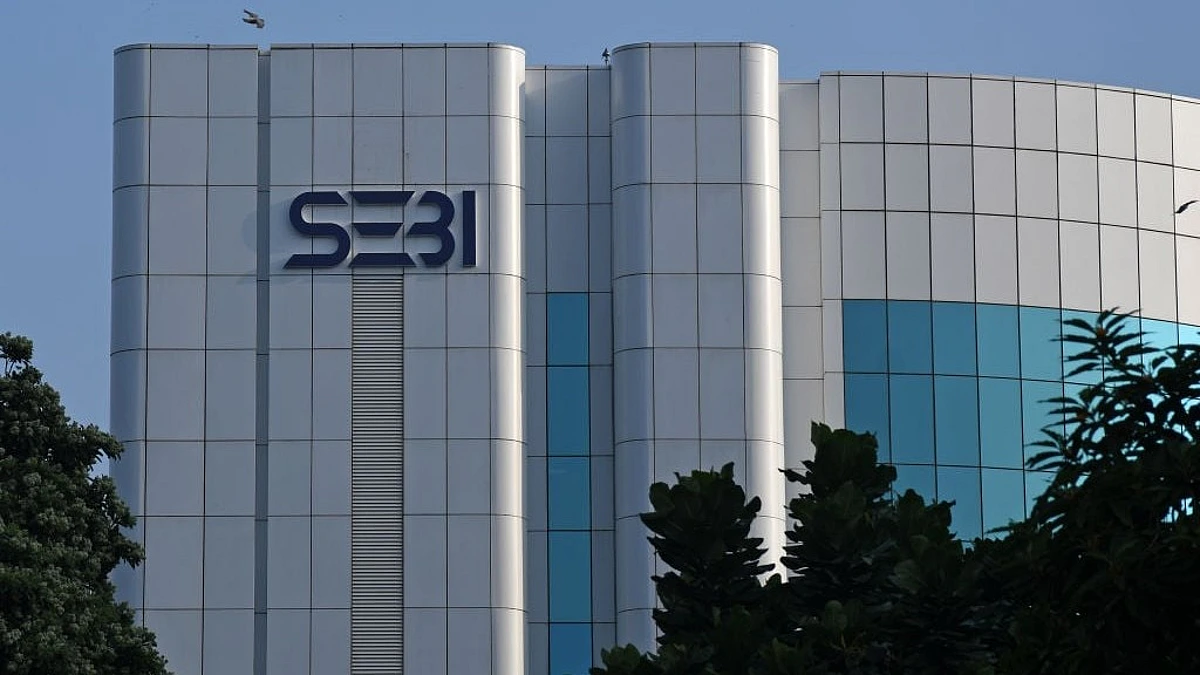
This is the first major SEBI enforcement action against financial fraud at an SME-listed company. It sets a precedent every founder on the SME IPO path now has to live with.
Status as of March 2026: SEBI enforcement proceedings ongoing. Based on publicly available SEBI interim order. This case study will be updated as proceedings conclude.
The Assumption That Broke
You probably assumed SME listing meant lighter SEBI scrutiny. That the forensic rigour applied to a Nifty 50 company didn’t reach BSE SME or NSE Emerge. That smaller companies had more room to breathe.
DroneAcharya Aerial Innovations ended that assumption.
The Pune-based drone services company listed on BSE SME in December 2022. Two years later, SEBI’s investigation concluded that approximately 35% of its FY24 revenue had been fabricated booked against two clients who had never received drones or services, whose registered addresses turned out to be ordinary residences and small retail shops.
The ‘lighter touch’ perception of SME oversight is operationally incorrect. This case makes that clear.
India’s SME IPO market grew rapidly between 2022 and 2024. Hundreds of companies listed, raising capital on sector growth stories and accessible listing requirements. A quiet assumption ran through most of it: that post-listing scrutiny was manageable. DroneAcharya is what happens when that assumption meets reality.
What Happened and How SEBI Found It
The fraud did not occur during the IPO process. It occurred in FY24 a full financial year after listing when DroneAcharya was subject to continuing disclosure and financial reporting obligations as a listed entity. That distinction matters.
SEBI’s investigation combined two techniques that, together, are difficult to counter:
- Financial surveillance: SEBI identified anomalous revenue acceleration in DroneAcharya’s quarterly filings a spike in revenue from specific clients in FY24 disproportionate to the company’s historical performance and operational scale.
- Physical verification: Investigators visited the addresses of the clients generating the contested revenue. They found residences and small commercial establishments not entities capable of entering into material drone services contracts.
No matching cash receipts. No service delivery records. Unverifiable client addresses. SEBI had a clean evidentiary basis for its fraud finding.
How the Revenue Was Fabricated
Revenue was recognised for drone services allegedly provided to two specific clients, with income booked in FY24 under post-IPO reporting obligations. No actual drones or services were delivered. The client addresses in company records were residential properties and small shops indicating these were shell or non-commercial entities used as counterparties to fictitious transactions.
The ~35% revenue fabrication figure is significant. Large enough to materially change how investors assessed the company’s growth trajectory. Calibrated below the level that would trigger an immediate operational breakdown. This calibration is a common feature of revenue inflation: sized to be consequential, not operationally impossible.
The Structural Pressure Nobody Talks About
Revenue fraud at SME-listed companies rarely emerges from nowhere. The pressure that enables it is typically present before listing and amplifies after it.
Promoters under pressure to demonstrate the growth trajectory implicit in their listing valuation face structural incentives to inflate revenue numbers. That is the human reality of post-IPO pressure. The governance failures below are what make acting on that pressure possible:
- A finance function too thin for the obligation where the same person generating revenue also records and approves it, the controls needed to surface fabrication internally do not exist.
- Auditors with insufficient professional skepticism longstanding auditor-promoter relationships compromise independence. A statutory auditor’s sign-off is necessary but not sufficient.
- A board that treats quarterly reviews as ceremonial where no director has ever asked to see the contracts underlying the top five revenue lines, the oversight function is not operating.
- Revenue concentration in a small number of clients this creates the structural opportunity to fabricate a single large client’s numbers with limited operational disruption. Exactly what happened at DroneAcharya.
What SEBI’s Enforcement Framework Actually Covers
The DroneAcharya action clarifies several important points about how SEBI approaches SME-listed company oversight.
- Post-listing financial accuracy is actively monitored. SEBI does not treat the IPO as the end of its scrutiny. Quarterly financial results filed under LODR Regulation 4(1)(f) are reviewed. Anomalous revenue patterns trigger investigation.
- Physical verification is a core technique in fraud investigations. Low-tech, but highly effective against companies booking revenue from non-commercial counterparties.
- The continuing obligation is permanent. Listing creates a permanent disclosure and financial accuracy obligation. Founders who view the IPO as a one-time compliance event are operating under a fundamental misunderstanding of securities law.
- Post-IPO fraud carries more severe consequences. DroneAcharya’s fraud occurred after listing making it a potential violation of LODR regulations, Section 12A of the SEBI Act, 1992, and SEBI’s PFUTP Regulations. Penalties, trading suspensions, and referral to enforcement agencies are all within scope.
Note: SEBI proceedings against DroneAcharya are ongoing as of March 2026. Final orders, penalties, and any criminal referrals will be updated when publicly confirmed.
The Five Things SEBI Will Look For
The question is not ‘will SEBI investigate us?’ the answer is increasingly yes. The right question is: can your books survive the kind of scrutiny applied to DroneAcharya?
A genuinely IPO-ready financial statement meets five non-negotiable standards:
- Every material revenue line is traceable end-to-end. Signed contract → delivery confirmation → invoice → bank receipt. Each link must exist independently of management’s say-so. A missing link in any material revenue item is a vulnerability.
- Counterparty identity is verifiable. Every client generating material revenue must be a genuine commercial entity with a verifiable address, PAN, and GST registration. Revenue from entities that cannot be verified at an address visit does not belong on your balance sheet.
- Revenue recognition policy is consistently applied and documented. The accounting note in your financial statements describes how you recognise revenue. Your actual practice must match that description exactly, not approximately. Policy-practice gaps are what auditors and forensic investigators look for first.
- Related party transactions are disclosed and priced at arm’s length. Post-IPO, every transaction between the listed company and any entity connected to its promoters must be disclosed, approved by the audit committee, and priced at arm’s length with supporting documentation.
- The audit trail operates independently of management. A forensic investigator should be able to reconstruct every material transaction from documentation alone, without any assistance from management.
What Every SME IPO Founder Should Take Away
- The IPO is not the finish line. Post-listing, every quarterly result you file is a representation to the market. Filing false information after listing carries more severe consequences than pre-IPO misstatement. Treat listing as the start of a permanent compliance obligation.
- DroneAcharya is the first, not the last. SEBI’s enforcement posture toward SME platforms has shifted. Founders who enter the SME IPO process assuming lighter oversight are taking a risk the regulatory environment no longer supports.
- Your statutory auditor’s sign-off is necessary but not sufficient. An auditor can sign accounts that later contain fabricated revenue. The question is whether your internal controls would have caught the fabrication before the auditor’s visit.
- 12–24 months of preparation is the minimum. The financial statements in your DRHP must have been produced under listing-grade standards. Retrofitting accounting quality after filing does not work and SEBI’s historical financials review will find the gap.
Your Books Need to Survive This Before You File
The DroneAcharya case demonstrates precisely where SME IPO preparation fails: companies that list without building the financial infrastructure to sustain post-listing scrutiny.
Treelife helps founders planning an SME IPO stress-test their financial governance Let’s Talk
Treelife helps founders planning an SME IPO stress-test their financial governance and disclosure readiness against the standard SEBI now applies.