


When ₹279 Crore Became the Price of Ignoring Your SHA – Medikabazaar
Written By

Treelife
Share
-
Link copied to clipboard!https://treelife.in/case-studies/when-%e2%82%b9279-crore-became-the-price-of-ignoring-your-sha-medikabazaar/

-

-

-

-

Blog Content Overview
- 1 1. THE CLAUSE NOBODY READS UNTIL IT’S TOO LATE
- 2 2. WHAT HAPPENED: COLLAPSE TIMELINE
- 3 3. FORENSIC INVESTIGATION: ALL THREE FIRMS AGREED
- 4 4. HOW AN INDEMNITY CLAIM ACTUALLY WORKS
- 5 5. WHERE GOVERNANCE FAILED: THE THREE GAPS
- 6 6. REVENUE RECOGNITION: THE HIGHEST-RISK LINE
- 7 7. WHAT EVERY FUNDED FOUNDER SHOULD TAKE AWAY
AI Summary
The collapse of Medikabazaar, a B2B healthcare supply chain startup, underscores the critical importance of diligence in governance, particularly concerning the representations and warranties in Shareholder Agreements (SHAs). After raising significant capital, the company's financial integrity was compromised, evidenced by discrepancies flagged by auditors. Subsequently, three forensic investigations confirmed gross negligence and fiduciary breaches by the CEO. Investors filed a ₹279 crore claim based on materially false representations. The case illustrates essential lessons for founders: treat SHA clauses as legal commitments, maintain clean financial records, recognize auditor resignations as significant warnings, and handle governance concerns transparently through board channels. Understanding these elements is vital to mitigate risks in the startup landscape.
The Medikabazaar Collapse: A Governance Case Study for Every Funded Founder
1. THE CLAUSE NOBODY READS UNTIL IT’S TOO LATE
Every SHA signed during a fundraising round contains a representations and warranties section. Founders sign it. Almost none of them read it carefully.
This section contains contractual statements of fact about your company: that the financial statements are accurate, that there are no undisclosed liabilities, that the business is FEMA-compliant, that there is no pending material litigation. These are not aspirational declarations they are legally binding representations. If they turn out to be materially false, investors have the right to invoke indemnity provisions and seek compensation.
Medikabazaar a B2B healthcare supply chain startup that raised Series C capital is where this became ₹279 crore of lived reality.
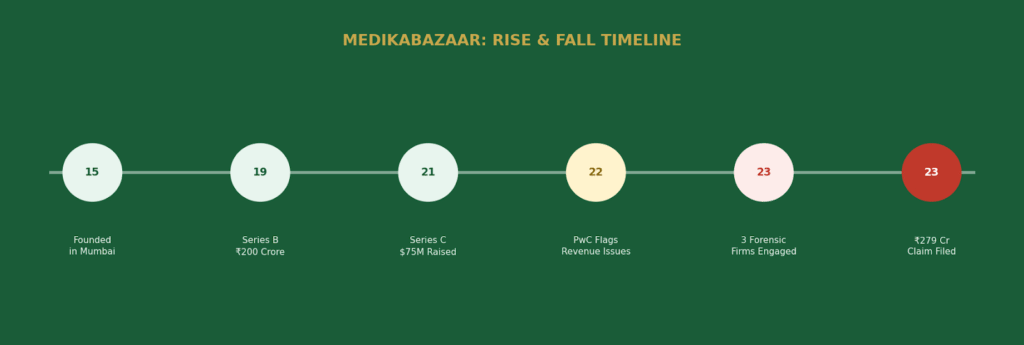
Figure 1: Medikabazaar — Rise & Fall Timeline
2. WHAT HAPPENED: COLLAPSE TIMELINE
Medikabazaar operated in B2B healthcare procurement, connecting hospitals and clinics with medical suppliers across India. The company had raised multiple rounds of institutional capital and was considered a meaningful player in health-tech supply chain.
| Stage | Event |
| Series C Fundraise | Medikabazaar raises institutional capital; founders sign SHA with representations & warranties |
| PwC Flags Issue | Statutory auditor flags revenue recognition inconsistencies — the highest-risk line in any financial statement |
| Board Commissions Forensics | Three independent forensic firms (Uniqus India, A&M, Rashmikant) engaged simultaneously |
| Unanimous Findings | All three firms confirm CEO breached fiduciary duty; gross negligence & misappropriation established |
| PwC Resigns | Formal auditor resignation signals to market that signed accounts cannot be relied upon |
| ₹279 Cr Claim Filed | Series C investors invoke SHA indemnity provisions based on materially false representations |
3. FORENSIC INVESTIGATION: ALL THREE FIRMS AGREED
The board commissioned three independent forensic investigations after PwC flagged revenue recognition inconsistencies. The unanimity of findings left no room for ambiguity.
| Forensic Firm | Key Finding |
| Uniqus India | CEO breached fiduciary duty; gross negligence and misappropriation confirmed |
| Alvarez & Marsal | Material misstatements in financial statements; revenue recognition manipulated |
| Rashmikant & Partners | Corroborated findings of misappropriation and financial irregularities |
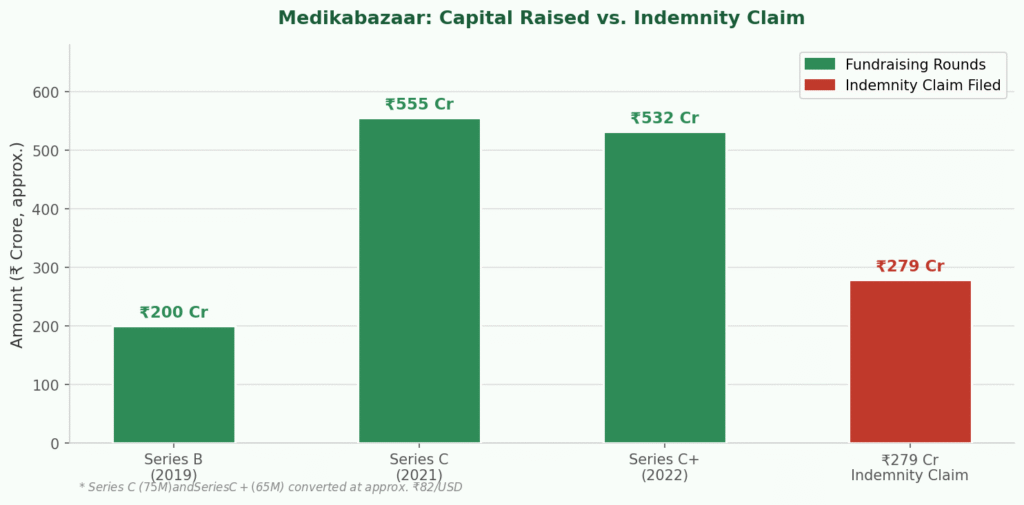
Figure 2: Capital Raised vs. Indemnity Claim (₹ Crore, approx.)
4. HOW AN INDEMNITY CLAIM ACTUALLY WORKS
Founders often treat the indemnity section of an SHA as a formality. It is not. Below is how the mechanism functions in practice when investors invoke it.
| SHA Mechanism | How It Works | Risk to Founder |
| Representations Lock-in | Statements about financials, compliance & liabilities are locked at signing | HIGH |
| Materiality Waivers | Fraud or willful misstatement removes basket/deductible protections | CRITICAL |
| Survival Periods | Claims survive 18–36 months; fraud can extend or remove limits entirely | HIGH |
| Claim Quantum | Tied to investor loss: investment value lost + valuation difference had truth been known | VERY HIGH |
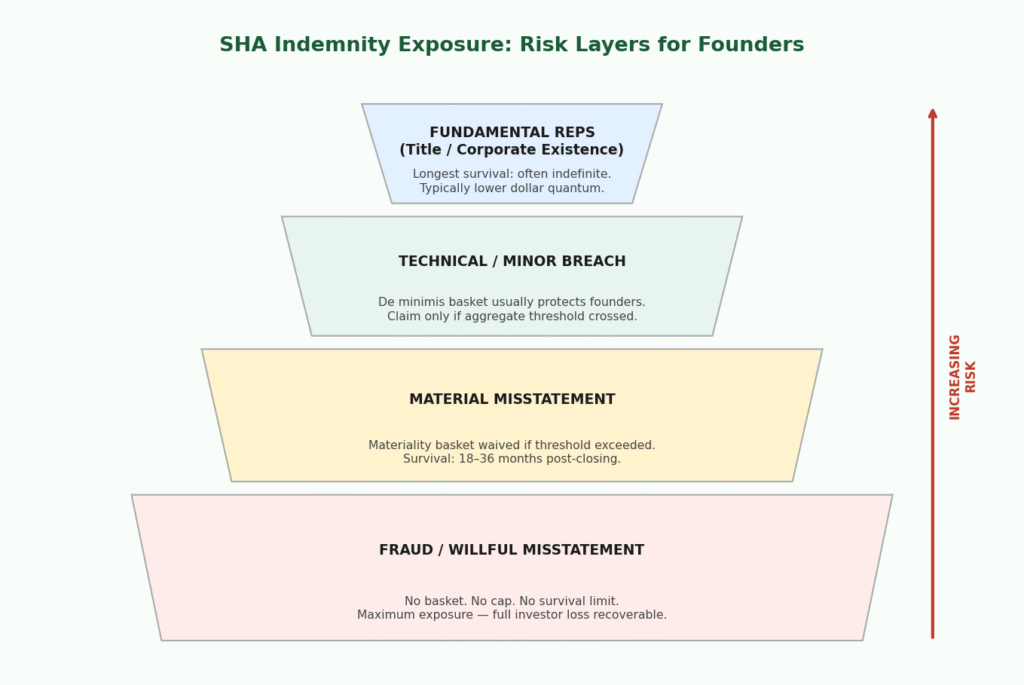
Figure 3: SHA Indemnity Exposure — Risk Layers for Founders
5. WHERE GOVERNANCE FAILED: THE THREE GAPS
The Medikabazaar situation reflects a failure pattern that repeats in funded startups: aggressive revenue recognition during fundraising periods, with internal oversight too weak to catch it before investors do.
| Governance Gap | What Was Missing | What Should Exist |
| No Functional Audit Committee | Quarterly substantive review of accounts | Active committee that flags issues before external auditors do |
| Auditor Familiarity Risk | Auditor independence from management | Rotation policy & arm’s length auditor relationship |
| Weak Finance Function | Audit-ready books at every stage, not just year-end | CFO-grade finance team capable of institutional-level scrutiny |
6. REVENUE RECOGNITION: THE HIGHEST-RISK LINE
| ⚠CRITICAL RISK AREA: Revenue recognition is the single most scrutinised line in any investor due diligence. Whether revenue is recognised on delivery, on invoicing, on cash receipt, or over a contract period directly shapes the financial picture presented to investors. An auditor flagging inconsistencies in revenue recognition triggers an immediate governance response and may constitute a material misstatement under your SHA representations. |
7. WHAT EVERY FUNDED FOUNDER SHOULD TAKE AWAY
| # | Key Lesson | Implication |
| 1 | SHA Representations Are Legal Commitments | Not aspirational they are the legal foundation of your investors’ investment decision. Incorrect financials = legal claim. |
| 2 | Clean Books Are Non-Negotiable at Series B+ | Institutional investors conduct forensic-grade due diligence. Aggressive revenue recognition will be found during DD or after. |
| 3 | Auditor Resignation Is a Material Event | It creates a documented compliance trail visible to all future investors, acquirers, and regulators. It cannot be managed quietly. |
| 4 | Respond Through the Board, Not Around It | Board-level documentation of every governance response is both the right action and the best legal protection in a dispute. |
About the Author
Share
-
Link copied to clipboard!https://treelife.in/case-studies/when-%e2%82%b9279-crore-became-the-price-of-ignoring-your-sha-medikabazaar/

-

-

-

-

Treelife

Treelife Team | support@treelife.in
We are a legal and finance firm with a deep focus on the startup ecosystem. We offer a wide range of services, including Virtual CFO, Legal Support, Tax & Regulatory, and Global Expansion assistance.
Our goal at Treelife is to provide you with peace of mind and ease in business.
We Are Problem Solvers. And Take Accountability.
Related Posts

GST Compliance Calendar for 2026 (Checklist) -Updates for Indian Businesses
India's GST framework has crossed a critical inflection point. From January 1, 2026, the compliance ecosystem became fully system-driven the...
Learn More

Corporate Laws (Amendment) Bill 2026: Everything for Founders, Funds, and Boards
Introduced in Lok Sabha on 18 March 2026 by Finance Minister Nirmala Sitharaman, the Corporate Laws (Amendment) Bill, 2026 is...
Learn More

India Amends Press Note 3 (2020): What the FDI Policy Update Means for Investors and Founders
India's Cabinet approved an amendment to Press Note 3 (PN3) of 2020 in March 2026, and it is generating significant...
Learn More