



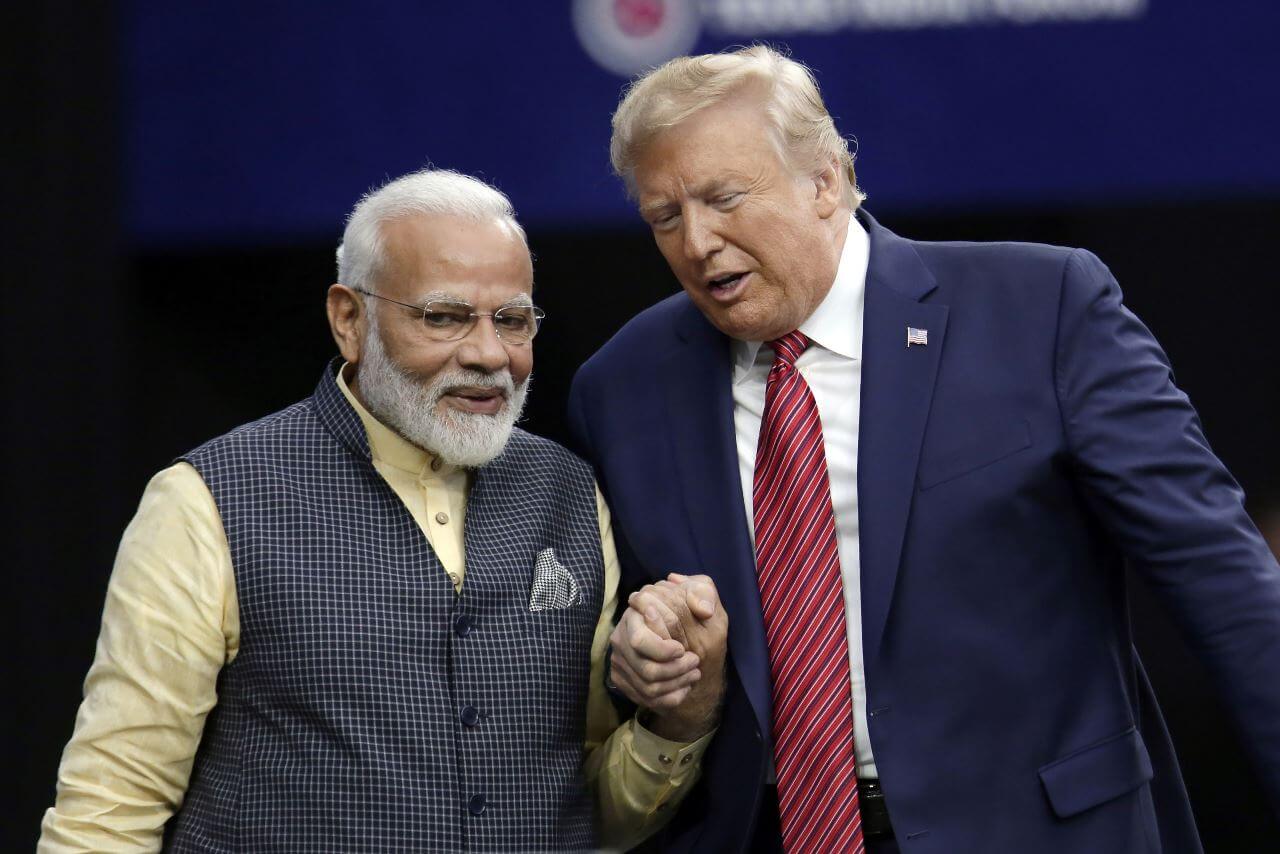
What Just Happened? A $500 Billion Game-Changer
The India-US trade deal is a strategic tariff reset and economic understanding aimed at expanding bilateral trade and geopolitical alignment. At its core, the deal:
- Slashes US tariffs on Indian goods to 18%, down from an effective ~50% rate.
- Signals India’s intent to gradually reduce Russian oil dependency, although no formal commitment has been made.
- Opens the path to over $500 billion in Indian purchases from the US across energy, tech, agriculture, coal, and more.
- Positions India as a key trading partner in the West’s supply chain diversification efforts
The Facts Behind the Headlines
Tariff Slash and Strategic Exchange
- Tariff Drop: US cuts duties on Indian goods to 18%, from ~50% (25% base + 25% punitive Russian-oil-linked surcharge).
- Geopolitical Context: President Trump’s claim India to curb Russian oil imports in return. PM Modi acknowledged tariff cut but has not confirmed the oil exit.
- The Wild Card: The real swing factor is energy the trade win is clear, but India’s oil source shift could reshape cost structures.
Who Gains in the Short Term?
Competitive Price Edge
- Textiles, Pharma, Steel: Gain 30–35% competitiveness overnight in the US market.
- Export Surge Potential: India’s $81–85.5 billion export base to the US (2024) offers immediate headroom for scaling exports
- Macro Advantage: India’s $46 billion trade surplus with the US could widen, strengthening the rupee and improving current account dynamics
Risk Note: Energy Cost Impact
- If India reduces discounted Russian crude (priced $15–25 lower per barrel), manufacturers may face $8–12 billion in extra energy costs annually
The India-Russia-US Triangle: Rebalancing Energy and Trade
| Factor | Detail |
|---|---|
| Russia’s Crude Share | ~40% of India’s oil (1.8M barrels/day) |
| Price Advantage Lost | $15–25/barrel more expensive for US/Gulf crude |
| Potential Cost Impact | $8–12 billion/year additional import burden |
| Likely Indian Strategy | Phased diversification, not an abrupt shift |
| Long-Term Insight | Trade shift to US may rise as energy ties with Russia dip |
Deep Sector Analysis: Who Benefits Most?
Textiles & Apparel
- US is the single largest destination for Indian textiles.
- Tariff drop boosts pricing power and demand.
- Action: Requote US buyers, secure medium-term volume contracts.
Pharmaceuticals & Chemicals
- Lower duties benefit price-sensitive generics and ingredients.
- Action: Rework landed cost models, accelerate US FDA filings.
Engineering, Electronics & Capital Goods
- Largest export category by value. Even a small margin gain is material.
- Action: Align with India’s PLI incentives, lock production for US-bound SKUs.
Gems, Jewellery & Marine
- High-value verticals where minor tariff tweaks impact final pricing.
- Action: Tighten inventory cycles, hedge currency exposure.
Steel & Metals
- Relief from general tariffs, but Section 232 duties may still apply.
- Action: Map HS codes carefully before pricing and exporting.
Founder & Investor Playbook
| Profile | Key Strategies |
|---|---|
| Exporters (Goods/SaaS) | Leverage 18% duty floor to price aggressively in US markets |
| Manufacturers | Model for 8–12% energy cost increase; optimize operations to offset |
| Investors | Overweight textiles, pharma, engineering expect margin expansion |
Deal Summary Table
| Indicator | Value/Details |
|---|---|
| New US tariff on Indian goods | 18% (from ~50%) |
| India’s exports to US (2024 est.) | $81–85.5 billion |
| India’s imports from US (2024 est.) | $46.1 billion |
| Total two-way trade | $212.3 billion |
| India’s crude from Russia | ~40% (1.8M barrels/day) |
| Cost impact if switching oil | $8–12 billion/year |
| Estimated purchase commitments | $500+ billion (multi-sector, phased) |
Implementation Timelines & Uncertainties
Key Unknowns
- Product-level tariff lists under the 18% cap.
- Zero-duty carve-outs and timelines for implementation.
- Section 232 tariffs on steel, aluminum, copper, autos may persist.
- Regulatory clarity pending: Rules of Origin, SPS/TBT norms, NTBs.
What Businesses Should Do Now
- Re-quote SKUs for top US-bound categories assuming new 18% duty.
- Secure logistics capacity for the next two quarters to meet revived US demand.
- Map HS codes to Section 232 and prepare alternative mixes.
- Build energy hedging strategies if Russian crude share drops.
- MSMEs should align with PLI and export finance windows to scale efficiently.
Who Wins in the Short Term?
- Price Edge: Textiles, Pharma, and Steel gain 30-35% price competitiveness in the US overnight.
- Export Surge: India’s ~$81B exports to US (2024) provide substantial foundation for growth if tariff relief is implemented. Source: USTR
- Macro Impact: Potential to widen India’s $46B trade surplus with the US, strengthening rupee and current account. Source: US Census Bureau
Risk Note: Energy-heavy sectors may face higher costs if discounted Russian crude ($15-25/barrel cheaper) is replaced.
Strategic Outlook: Long-Term Alignment
- The deal complements India’s broader push for trade diversification including agreements with the EU and Indo-Pacific partners.
- It sets India on a path to deepen integration with Western economies, while carefully managing energy sovereignty.
- Sectors ready to act fast will likely lead in capturing share in the world’s largest consumer market.
Summary
- US tariffs on Indian goods cut to 18% from ~50%, catalyzing export growth.
- Textiles, pharma, engineering, and steel set for significant upside.
- Energy cost sensitivity is the main risk, tied to India’s Russian crude exposure.
- Implementation phase is underway businesses should prepare pricing, capacity, and compliance strategies immediately.
India now stands at a critical juncture: ready to scale global trade presence while navigating energy transitions. The deal is a historic step but what comes next will be shaped by how quickly businesses adapt and how strategically India rebalances its global partnerships.